SEE: • Congress Hotel • Neighborhoods & Barrios
TUCSON, THE OLD PUEBLO...
Native American, Spanish, Mexican, and Old West combine to
make this a most unique American city. |
|
| |
|
Often voted one of the best cities in America Tucon's mix of modern and
vintage southwestern cultures makes it an exciting city live in or visit. |
|
| |
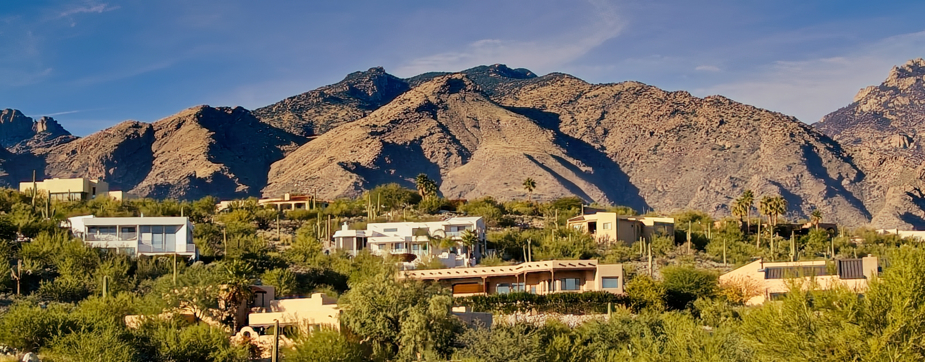
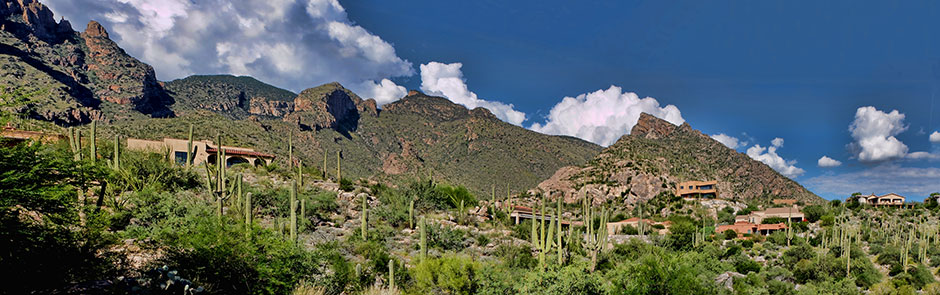
The city sits in a high desert valley surrounded by four majestic mountain ranges |
|
|
 |
In the heart of downtown, century-old adobe homes, graceful Victorian mansions, and sleek modern office buildings stand side by side. Museums, galleries, and an array of restaurants make it easy to explore the city’s culture and flavor on foot.
Left: Standing in elegant contrast to Tucson’s modern skyline, the Pima County Courthouse—designed by Roy Place in 1928—features classic Mission Revival and Spanish Colonial Revival architecture. |
PIMA COUNTY HISTORIC COURTHOUSE

|
Downtown also features the city's major performing arts events, provided by the Tucson Convention Center and the Temple of Music and Art presenting the main venues for opera, symphony and dance performances.
Tucson’s downtown has evolved into the city’s entertainment hub, featuring fewer offices and more restaurants, along with a modern streetcar that brings in crowds from across the area.
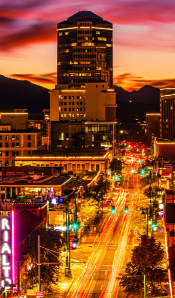
Like many cities around the world, Tucson has seen its traditional architecture give way to modern development. In the 1960s, a wave of progress swept through the city, and early barrios built by Mexican settlers were threatened. Much of downtown Barrio Viejo was flattened to make room for a barnlike convention center, erasing layers of history in a single stroke. Yet out of that loss came awareness: today, Tucson is increasingly committed to protecting and celebrating the stories, colors, and culture that have shaped its unique past.
|

|

Benedictine Monastery
Built in the 1940s, the Benedictine Monastery served as a serene convent and chapel for the Benedictine Sisters of Perpetual Adoration, who lived and worked there for many decades. The Sisters’ presence became a quiet landmark in Tucson’s spiritual life. In 2016, facing an aging community and declining vocations, the order announced the monastery’s closure. The property was purchased by a developer the following year. Nearly a decade later, in 2025, new life returned to the historic chapel when concert promoters announced plans to open La Rosa, a music venue that will blend the site’s architectural grace with a new cultural purpose. |
|
THE CONGRESS HOTEL

Tucson’s Hotel Congress is a living piece of the Old West, standing proudly amid a world of cookie-cutter chain hotels. Since opening in 1919, it has seen it all—including the infamous 1934 capture of John Dillinger’s gang. Today, the hotel buzzes with life as a favorite spot for locals and visitors alike, featuring a lively restaurant, bar, and music venue that keeps its legendary spirit alive. |
|
|
|
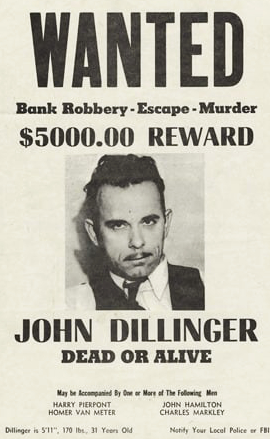
Arrested at the Congress in 1934
Tiger's Taproom, many years of happy hours. |
 |
|
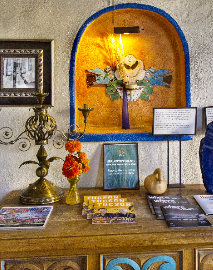
The ranch was later used as a shooting location for Duel in the Sun starring Gregory Peck and Jennifer Jones.
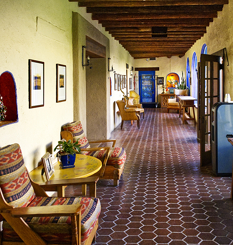
|
HACIENDA DEL SOLA, A TIMELSS SOUTHWEST HACINDA IN THE CATALINA FOOTHILS
Nestled at the base of the Catalina Foothills, Hacienda Del Sol was born in 1929 as a desert retreat and girls’ ranch school—a serene “home away from home” where the beauty of the Southwest inspired learning and leisure. By 1948, it had transformed into a glamorous guest ranch, drawing the glittering stars of Hollywood. Legends like John Wayne, Clark Gable, Spencer Tracy, and Katharine Hepburn walked its sun-drenched courtyards and strolled among its adobe walls, making Hacienda Del Sol a place where the spirit of the Old West met the golden age of cinema. 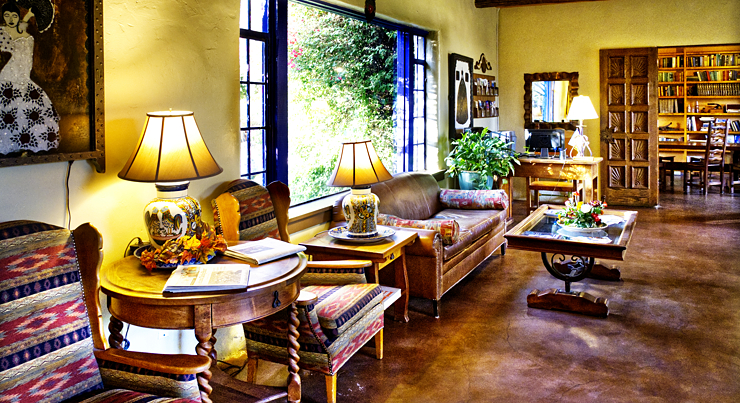 |
FAMOUS RESORTS
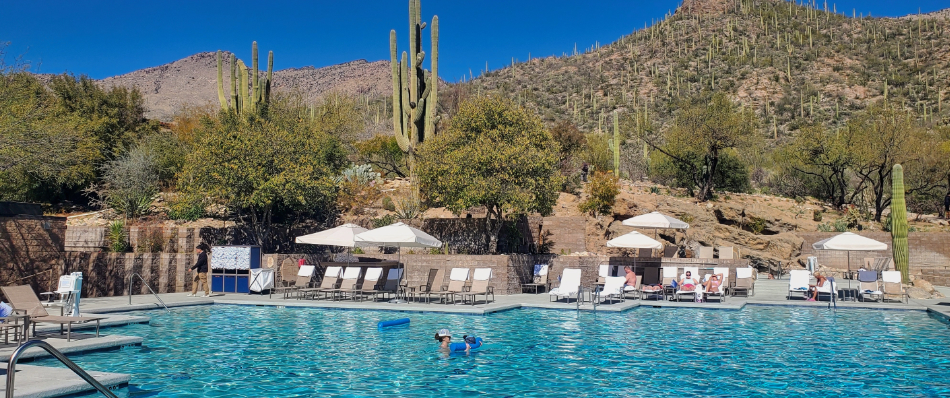
For the winter visitor, Ventana Canyon is just one of the many modern Tucson resorts
|
|
|
|