See: • Father KinoPancho Villa

A LITTLE HISTORY

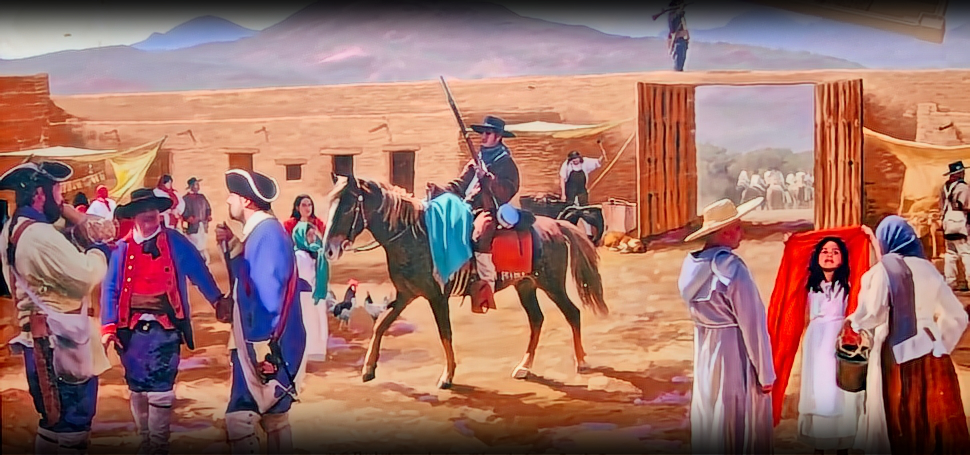
The Spanish Presido San Agustine in the 16 hundreds

Tucson has a long history of continuous habitation, initially by indigenous peoples like the Hohokam, before being founded as a Spanish military fort in 1775. It later became part of Mexico in 1821 and was acquired by the United States in 1853 via the Gadsden Purchase. The city served as the capital of the Arizona Territory from 1867 to 1877 and grew into a major cultural and economic center, with the University of Arizona founded in 1885.
Historic Tucson Arazona

Downtown Tucson barrio around 1874z

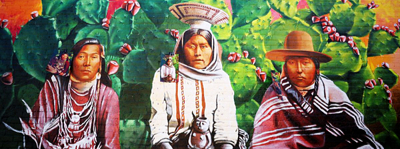
From Indian Tribes To Spanish And Anglo Settlers

Archaeological digs Have revealed adobe huts, pit houses, and irrigation systems built by the Hohokam and other tribes who settled and farmed the Tucson area Almost 2,000 years ago.

the Presidio 
ruins Tucson Aeizona

In the shadow of modern city office buildings the Presidio
ruins can still be seen in downtown Tucson
.

"The first Europeans to enter the American Southwest reached present-day Arizona via Mexico less than fifty years after Columbus’s discovery of the New World—long before the Pilgrims established settlements in New England.

AN EARLY MISSION

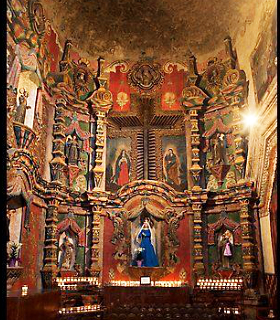
Mission San Xavier del Bac, Tucson

San Xavier del Bac Mission, founded in 1692 by Jesuit missionary Father Eusebio Francisco Kino is a stunning example of Spanish colonial architecture and a lasting center of faith and culture for the Tohono O’odham people.

Located near Tucson, Arizona, the mission has served for centuries as a place of worship, community, and cultural exchange. Recognized for its historical and architectural significance, it was designated a National Historic Landmark in 1960 and added to the National Register of Historic Places in 1966.

San Xavier del Bac Mission

The best dressed westerner in the 30s


Tucson began thousands of years ago with the arrival of Native Americans who settled along the banks of the Santa Cruz River, where they cultivated crops and built thriving communities. This long Indigenous presence changed forever in 1775, when Spanish settlers established the Presidio San Agustín del Tucson, a fortified military outpost. The Spanish brought new architecture, religion, and culture that would shape the city’s identity for centuries to come, marking the beginning of Tucson’s recorded history.

Spanish soldiers established Presidio San Agustín del Tucson shortly after their arrival, marking the beginning of a settlement that would be shaped over centuries by many different cultures.


Saint Augustine Cathedral Tucson
Saint Augustine Cathedral

Built in 1896 in the Romanesque Revival style, the church was redesigned in the 1920s. Its towers and façade were rebuilt in reinforced concrete and plaster, adopting the Spanish Colonial Revival style we see today.

TUCSON'S FIRST EUROPEAN EXPLORER
Eusebio Francisco Kino


Father Kino was a Jesuit priest who founded a total of 27 missions in present-day Arizona and northern Mexico. Kino arrived in the Tucson area in 1692 and founded the Mission San Xavier del Bac. A great explorer and important cartographer he produced some of the first maps of the northern frontier of New Spain and Baja California.
Movies, books articles and documentaries… Father Kino's story of discovery is a major part of Tucson's history.

Movies, books articles and documentaries… Father Kino's story of discovery is a major part of Tucson's history

If there is any one person who could be said to have written the early history of Tucson and Northwest Mexico it's Father Kino. Tucson's early history is tied closely to the development of Northern Sonora, Mexico and the small town of Magdalena de Kino 80km south of the border.yjmyr

Tucson was the capital of the Arizona Territory from
November, 1867, until it was moved north to Prescott in 1878.


A Borderline Decision For Tucson

Tucson became part of the U.S. with the Gadsden Purchase in 1854, when the United States paid Mexico $10 million for a 29,670 square mile strip of land that is now southern Arizona and southwestern New Mexico. The main reason for the purchase was to secure land for a southern transcontinental railroad and to resolve border disputes after the Mexican-American War. 

PANCHO VILLA, THE 'BANDIT'?

The statue of Pancho Villa in downtown Tucson has created heated argument since it was presented to the city by Mexico in 1981. Like most civil wars and revolutions one man’s hero is another man’s terrorist.

Villa has been described as a Mexican Robin Hood, “a man who had unlimited amounts of self-confidence, courage, and endurance”.

Others have suggested the statue be melted down for scrap. The demands for its removal continue but the city shows no sign of doing so.


The Southern Pacific station in Tucson about 1900 and still in operation..
Read More

When the Southern Pacific Railroad arrived in Tucson in 1880, the city began to grow rapidly, reaching a population of 8,000 shortly thereafter. Arizona joined the Union as the 48th state in 1912, and over the decades Tucson continued to expand, surpassing 400,000 residents by 1990.